



Think of ceramides as part of the mortar holding your skin barrier together
CeraVe builds every skincare formula around three essential ceramides. Here is what those lipids actually do, what a compromised skin barrier can feel like, and how to build a simpler routine when your skin becomes dry, tight or irritated.

CeraVe Ceramides Explained: Why They Matter for a Damaged Skin Barrier
Ceramides are naturally occurring lipids that form a major part of the skin's protective barrier. CeraVe uses three essential skin-identical ceramides throughout its cleansers, moisturisers and serums. This guide explains what they do, what people mean by a “damaged skin barrier,” how MVE technology fits the formula story and which CeraVe products make sense when skin feels dry, tight or over-treated.
“Repair your skin barrier” has become one of skincare's most repeated phrases, but the basic idea is simpler than social media often makes it sound.
Your skin already has a protective outer layer designed to keep necessary moisture in and help limit exposure to external irritants.
Ceramides are one of the major lipid components of that barrier.
CeraVe says ceramides make up approximately 50% of the lipids in the skin barrier, which explains why the brand has made three essential ceramides a central part of its formulas.
What are ceramides?
Ceramides are lipids — a type of fatty molecule — found naturally in the outer layers of your skin.
They are not exfoliating acids, retinoids or active acne treatments.
Instead, they are structural components of the skin barrier.
The brick-and-mortar analogy
A common way to understand the skin barrier is to imagine a brick wall.
The skin cells are the bricks.
Lipids such as ceramides, cholesterol and fatty acids form part of the material surrounding those cells — similar to mortar between bricks.
When that structure functions well, it helps:
- retain moisture,
- reduce excessive water loss,
- support comfortable skin,
- and provide a protective interface with the outside environment.
Ceramides do not “coat” the face with an artificial barrier. They are lipids similar to components already naturally present in healthy skin.
What exactly is the skin barrier?
The skin barrier refers mainly to the outermost portion of the epidermis.
It acts as the interface between your body and the outside environment.
A well-functioning barrier helps perform two particularly important jobs:
CeraVe describes the barrier's lipid composition as containing approximately:
- 50% ceramides,
- 25% cholesterol,
- and roughly 10–25% fatty acids.
Those percentages help explain why skincare formulations often use ceramides together with other moisturising and lipid-support ingredients rather than treating ceramides as a complete routine by themselves.
What are CeraVe's three essential ceramides?
CeraVe says all of its skincare products are formulated with three skin-identical essential ceramides.
They are traditionally described by the brand as:
- Ceramide 1,
- Ceramide 3,
- Ceramide 6-II.
On modern ingredient lists, you will commonly see corresponding ceramides listed as:
- Ceramide EOP,
- Ceramide NP,
- Ceramide AP.
Why three rather than one?
There are multiple types of ceramides naturally present in skin.
CeraVe's product philosophy is built around replenishing several important barrier lipids rather than relying on a single ceramide.
Does “three ceramides” automatically make a product better?
Not automatically.
A skincare formula should be judged as a complete formulation, including:
- its texture,
- humectants,
- emollients,
- occlusive ingredients,
- cleansing agents where relevant,
- and how well your skin tolerates it.
A product with three ceramides is not automatically three times more effective than a product highlighting one ceramide. The overall formula and how consistently you can use it matter.
What does a “damaged skin barrier” look or feel like?
“Damaged skin barrier” is a common consumer skincare phrase rather than a diagnosis.
A compromised or disrupted barrier can be associated with symptoms such as:
- unusual dryness,
- tightness,
- flaking,
- roughness,
- increased sensitivity,
- stinging when products are applied,
- or skin that feels less comfortable than usual.
However, these symptoms are not specific to barrier disruption.
Dryness, redness, itching or burning can also occur with various skin conditions, allergies, irritation and other causes.
If redness, burning, swelling, itching or peeling is severe, persistent or unexplained, simplifying your routine is sensible, but professional assessment may also be appropriate.
What can make the skin barrier feel compromised?
Barrier problems often appear after several stressors overlap rather than because you failed to buy a specific serum.
Over-cleansing
Repeatedly washing with strong cleansers can leave some skin feeling tight and dry.
Too much exfoliation
Using several AHA and BHA products at once can exceed your skin's tolerance.
Retinol used too aggressively
Retinol can be valuable, but introducing it too frequently can cause dryness, peeling or irritation.
Very hot water
Long, hot showers can make already-dry face and body skin feel more uncomfortable.
Harsh physical scrubbing
Rough brushes, exfoliating gloves and grainy facial scrubs can add friction to already-reactive skin.
Dry indoor environments
Long periods in air-conditioned rooms can increase the sensation of dryness for people whose skin already struggles to retain moisture.
Skin conditions
Some dermatological conditions can also involve abnormalities in barrier function and ceramide levels.
That does not mean a cosmetic ceramide cream should be described as a cure for those conditions.
What is CeraVe MVE technology?
CeraVe frequently pairs its three essential ceramides with MVE Delivery Technology.
MVE stands for MultiVesicular Emulsion.
The basic concept is controlled or gradual release of moisturising ingredients rather than delivering everything at once.
CeraVe describes MVE technology as encapsulating ingredients in multiple layers that gradually release over time.
What does that mean practically?
For the user, the important point is not the technical acronym.
It means CeraVe designs many of its moisturisers around maintaining hydration for longer after application rather than only producing an immediate moisturised feel.
You do not need to “layer MVE” with ceramides. MVE is CeraVe's delivery technology used within the formula.
Ceramides vs hyaluronic acid, glycerin and petrolatum
These ingredients perform different jobs, so they should not be treated as direct substitutes.
| Ingredient Type | Main Role in a Moisturising Formula |
|---|---|
| Ceramides | Barrier lipids that help support the structure and function of the skin's protective moisture barrier. |
| Hyaluronic acid | Humectant used to help attract and retain water within the moisturising routine. |
| Glycerin | Another widely used humectant that supports skin hydration. |
| Dimethicone | Skin-conditioning and protective ingredient that can help reduce moisture loss and improve skin feel. |
| Petrolatum | Occlusive ingredient that helps reduce water loss by forming a protective layer over the skin. |
This is why a richer product such as CeraVe Moisturising Cream does not rely on ceramides alone.
Its formula combines three essential ceramides with hyaluronic acid, dimethicone and petrolatum to address hydration and moisture retention through several mechanisms.
Instead of asking whether ceramides are “better” than hyaluronic acid, ask whether the complete formula gives your skin the balance of hydration, emollience and moisture retention it needs.
CeraVe products for a barrier-focused routine
CERAVE
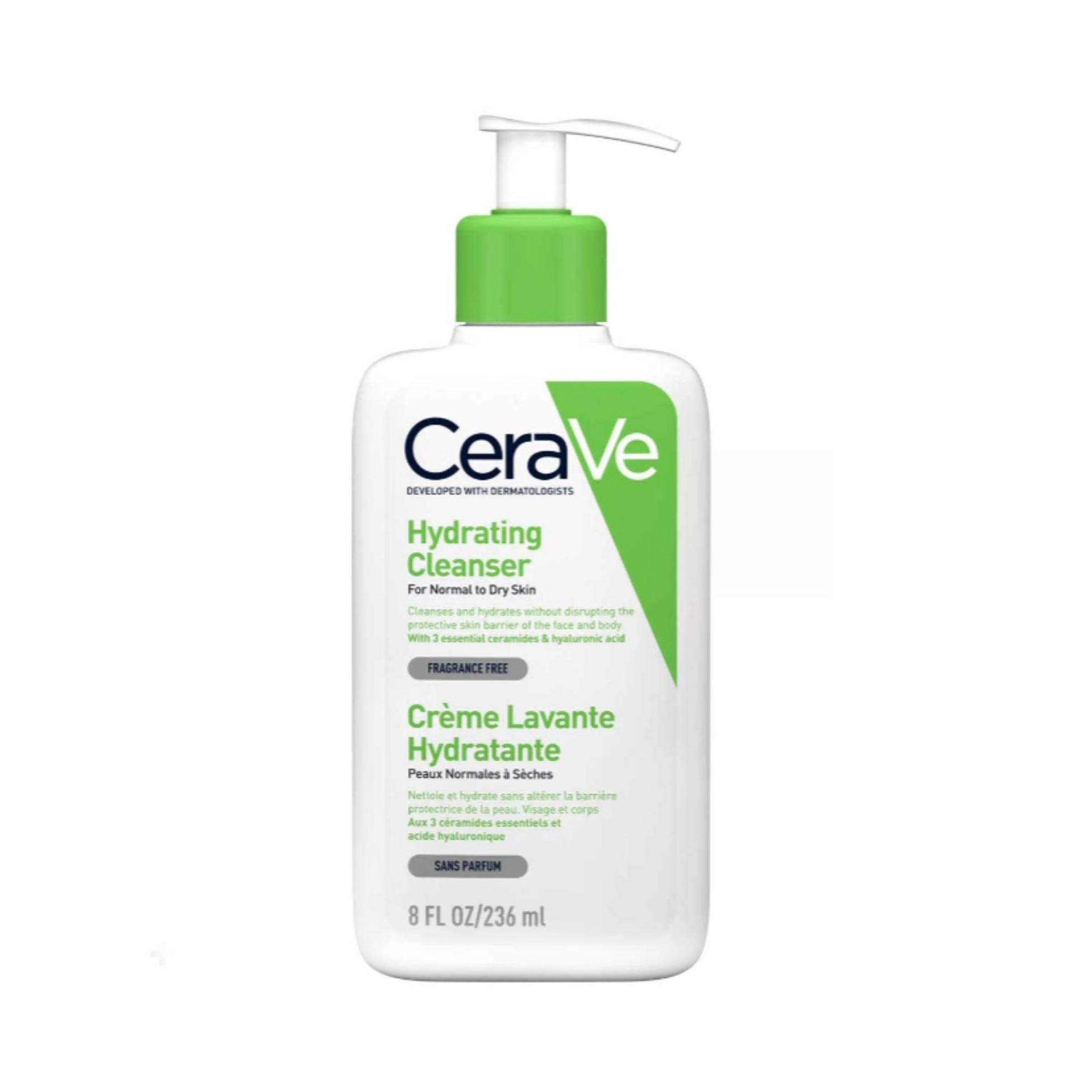
CeraVe Hydrating Cleanser 236ml
Non-foaming face-and-body cleanser for normal-to-dry skin with three essential ceramides and hyaluronic acid. A useful starting point when skin already feels dry, tight or uncomfortable after stronger cleansers.
AED 70
CERAVE
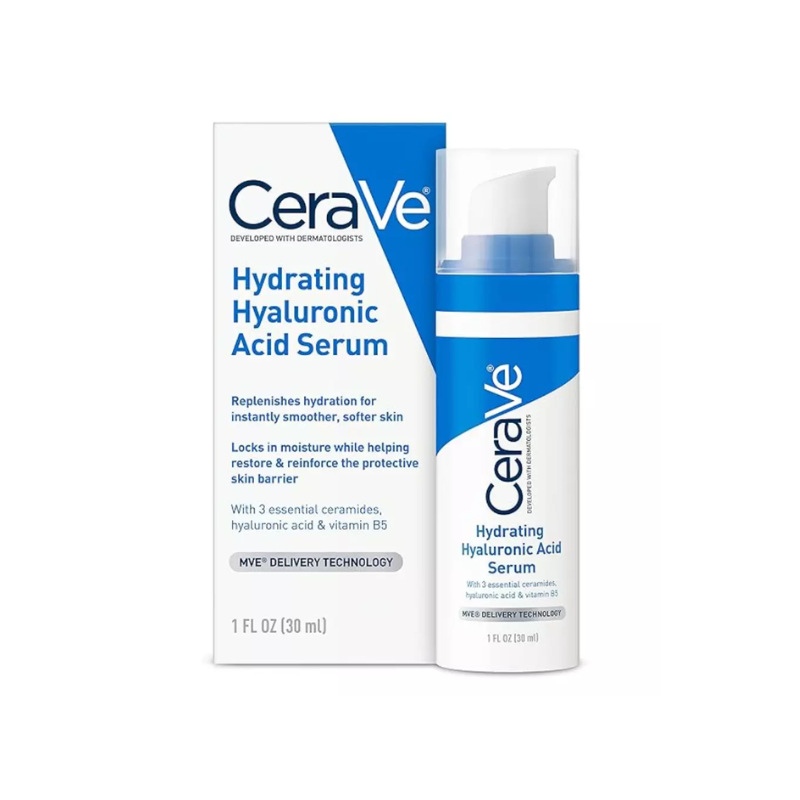
CeraVe Hydrating Hyaluronic Acid Serum 30ml
Optional hydration step combining hyaluronic acid, vitamin B5 and three essential ceramides. Useful when your moisturiser needs a lightweight hydration boost, but not mandatory in every barrier routine.
AED 75

CERAVE
CeraVe Moisturising Lotion 473ml
Lightweight face-and-body moisturiser with three essential ceramides and hyaluronic acid. The easier choice when you want barrier-support hydration without the richer finish of a cream.
AED 92
CERAVE
CeraVe Moisturising Cream 454g
Richer face-and-body moisturiser with three essential ceramides, hyaluronic acid, dimethicone and petrolatum. Best suited when dryness, tightness and moisture loss require a more substantial texture.
AED 84
A simple CeraVe routine when your skin barrier feels compromised
If your skin has become unusually dry, tight or reactive after an aggressive routine, simplicity can be useful.
Morning
Evening
A practical starting routine can simply be: gentle cleanser → moisturiser → sunscreen by day. You do not need a separate toner, essence, ampoule and sleeping mask for the routine to be barrier-friendly.
Can ceramides be used with retinol, salicylic acid and vitamin C?
Generally, ceramides are not used like exfoliating actives that must be carefully separated from many other ingredients.
Barrier-support moisturisers containing ceramides can often fit routines that also contain:
- retinol,
- salicylic acid,
- AHA exfoliants,
- vitamin C,
- niacinamide,
- or acne treatments.
The main issue is usually not whether ceramides are compatible.
It is whether the active treatment itself is being used more aggressively than your skin tolerates.
With retinol
A ceramide moisturiser can be particularly useful when retinol makes the skin feel dry.
Read: CeraVe Resurfacing Retinol Serum: Benefits and How to Use .
With salicylic acid
A non-exfoliating ceramide moisturiser can follow an SA cleanser to support hydration without adding yet another exfoliating step.
With vitamin C
Ceramide moisturisers can generally be used as the moisturising step after a vitamin C serum.
If your routine contains retinol, multiple AHAs, BHA and other acne treatments and your skin starts peeling, adding more products may not solve the underlying issue. Reducing unnecessary active frequency can be just as important as moisturising.
Are ceramides only for dry skin?
No.
Ceramides are naturally part of the barrier of all skin types.
That includes:
- oily skin,
- combination skin,
- normal skin,
- dry skin,
- and sensitive skin.
The difference is usually the product texture you choose.
Dry skin
A richer product such as Moisturising Cream may feel more comfortable.
Combination or oilier skin
A lighter lotion can provide ceramides without the heavier cream texture.
Acne-prone skin
Ceramides do not directly unclog pores like salicylic acid, but a barrier-support moisturiser can help keep an acne routine from becoming unnecessarily drying.
Read: CeraVe Face Wash for Acne .
Why ceramide skincare makes sense in the UAE
UAE skincare has to work across opposite environments.
Outdoor heat and humidity
Sweat and oil may make you prefer lighter moisturiser textures during the day.
Indoor air conditioning
Hours in lower-humidity offices, malls, cars, universities and bedrooms can make dry or treatment-sensitive skin feel tighter.
A lightweight ceramide lotion by day and richer cream at night can be a practical combination.
Frequent cleansing
Gym sessions, commuting and heavy sweating can lead to additional washing.
Choose cleansing frequency according to need rather than using a strong cleanser every time your skin feels warm.
Strong UV exposure
Ceramides support barrier care, but they do not replace sunscreen.
Daily broad-spectrum sun protection should remain a separate morning step.
Air-conditioning dryness
For a complete routine, read: CeraVe for Dry Skin in Air Conditioning .
Think in terms of balance: clean effectively outside, moisturise appropriately inside and avoid turning every cleanse into exfoliation.
What ceramides can — and cannot — do
| Ceramides Can Help With | Ceramides Should Not Be Presented As |
|---|---|
| Supporting the skin's moisture barrier | An instant cure for redness |
| Helping reduce moisture loss within a moisturising formula | An acne treatment |
| Supporting dry or uncomfortable skin | A replacement for sunscreen |
| Complementing retinol or exfoliating routines | A reason to continue overusing irritating actives |
| Working alongside humectants and occlusives | A guaranteed treatment for eczema or another skin disease |
Ceramides are useful because they are fundamental barrier lipids.
That does not mean every skin problem is caused by a ceramide deficiency or that every irritated face only needs a ceramide cream.
Ceramides make the most sense as part of a well-formulated, consistent skincare routine: gentle cleansing, adequate moisturising, sensible use of active ingredients and daily sun protection.
Frequently asked questions
What are ceramides and what do they do for the skin barrier?
Ceramides are lipids naturally found in the skin's outer barrier. They help form the lipid structure that keeps moisture in and helps protect the skin from external irritants. CeraVe states that ceramides make up approximately half of the lipids in the skin barrier.
What are the three essential ceramides in CeraVe?
CeraVe uses three skin-identical essential ceramides traditionally described as ceramides 1, 3 and 6-II. On current ingredient lists, you commonly see ceramide EOP, ceramide NP and ceramide AP.
How can I tell if my skin barrier may be compromised?
A compromised barrier can be associated with unusual dryness, tightness, roughness, flaking, stinging or increased sensitivity. However, these symptoms can have other causes, so persistent, severe or unexplained irritation should not automatically be self-diagnosed as barrier damage.
Is CeraVe Moisturising Cream good for a damaged skin barrier?
CeraVe Moisturising Cream is formulated with three essential ceramides, hyaluronic acid, dimethicone and petrolatum to support hydration and the skin's protective barrier. It is a useful barrier-focused moisturiser for dry skin, but it should not be presented as a cure for every cause of redness, irritation or skin disease.
Can I use ceramides with retinol, salicylic acid or vitamin C?
Ceramide moisturisers can generally fit routines containing retinol, salicylic acid or vitamin C. They are often useful for supporting hydration when active treatments feel drying. The bigger concern is whether the active ingredients themselves are being used more frequently than your skin tolerates.
How long does it take to repair a damaged skin barrier?
There is no reliable universal timeline because recovery depends on what caused the irritation, its severity and whether the triggering products or habits continue. Simplifying the routine, cleansing gently and moisturising consistently can support recovery, while persistent or severe symptoms may need professional assessment.
Barrier care starts with consistency, not complexity
Choose gentle cleansing, the right moisturiser texture and sensible active use, then let ceramides support the routine instead of turning “barrier repair” into another ten-product regimen.
Explore CeraVe UAE“Damaged skin barrier” and “barrier repair” are common skincare terms and should not be used to self-diagnose an underlying dermatological condition. Dryness, redness, itching, burning and peeling can have multiple causes. Persistent, severe or unexplained symptoms should be assessed appropriately. Ceramide skincare can support hydration and normal barrier function but is not a cure for eczema, acne, allergic reactions or other skin conditions. Product formulas, prices and availability can change; check current packaging and live YesOra Beauty product pages as final references.