



Sensitive skin needs less irritation — not more cleansing power
The right cleanser should remove sweat, sunscreen and daily buildup without leaving your face burning, tight or stripped. Here is how to choose between CeraVe Hydrating, Foaming and salicylic-acid cleansers when your skin reacts easily.

CeraVe Cleanser for Sensitive Skin: Best Options and What to Avoid
Sensitive skin can be dry, oily, combination or acne-prone, so there is no single cleanser for every reactive face. This UAE guide explains why CeraVe Hydrating Cleanser is usually the gentlest starting point, when Foaming Cleanser makes more sense and when salicylic-acid cleansers may be too much.
A sensitive-skin cleanser should not be judged by how intensely it foams or how “deeply clean” the face feels afterwards.
For reactive skin, the better result is often much less dramatic: the skin simply feels clean, comfortable and normal.
CeraVe's own sensitive-skin guidance recommends gentle formulas, especially fragrance-free cleansers, while keeping the routine simple enough to avoid unnecessary exposure to potential triggers.
What does sensitive skin mean?
Sensitive skin is generally more likely to react to environmental conditions or skincare ingredients.
Common experiences can include:
- burning or stinging after skincare,
- redness,
- itching,
- tightness,
- dryness,
- or feeling uncomfortable after cleansing.
But sensitivity is not a complete skin type by itself.
You can have:
- sensitive dry skin,
- sensitive oily skin,
- sensitive combination skin,
- or sensitive acne-prone skin.
That means the right CeraVe cleanser depends on both sensitivity and your underlying oil/dryness pattern.
If your face suddenly starts burning after products that previously felt comfortable, do not automatically buy a stronger “sensitive skin treatment.” Temporarily simplifying the routine may be more useful than introducing several new actives at once.
Best CeraVe cleansers for sensitive skin
| Your Skin Pattern | Best Starting CeraVe Cleanser |
|---|---|
| Sensitive + dry | Hydrating Cleanser |
| Sensitive + normal | Hydrating Cleanser |
| Sensitive + combination | Hydrating or Foaming depending oiliness |
| Sensitive + oily | Foaming Cleanser |
| Sensitive + rough texture | SA Smoothing cautiously, once skin is comfortable |
| Sensitive + acne/blackheads | Gentle cleanser first; Blemish Control only if tolerated and needed |
| Currently burning or peeling | Keep cleansing simple; avoid adding exfoliating cleanser |
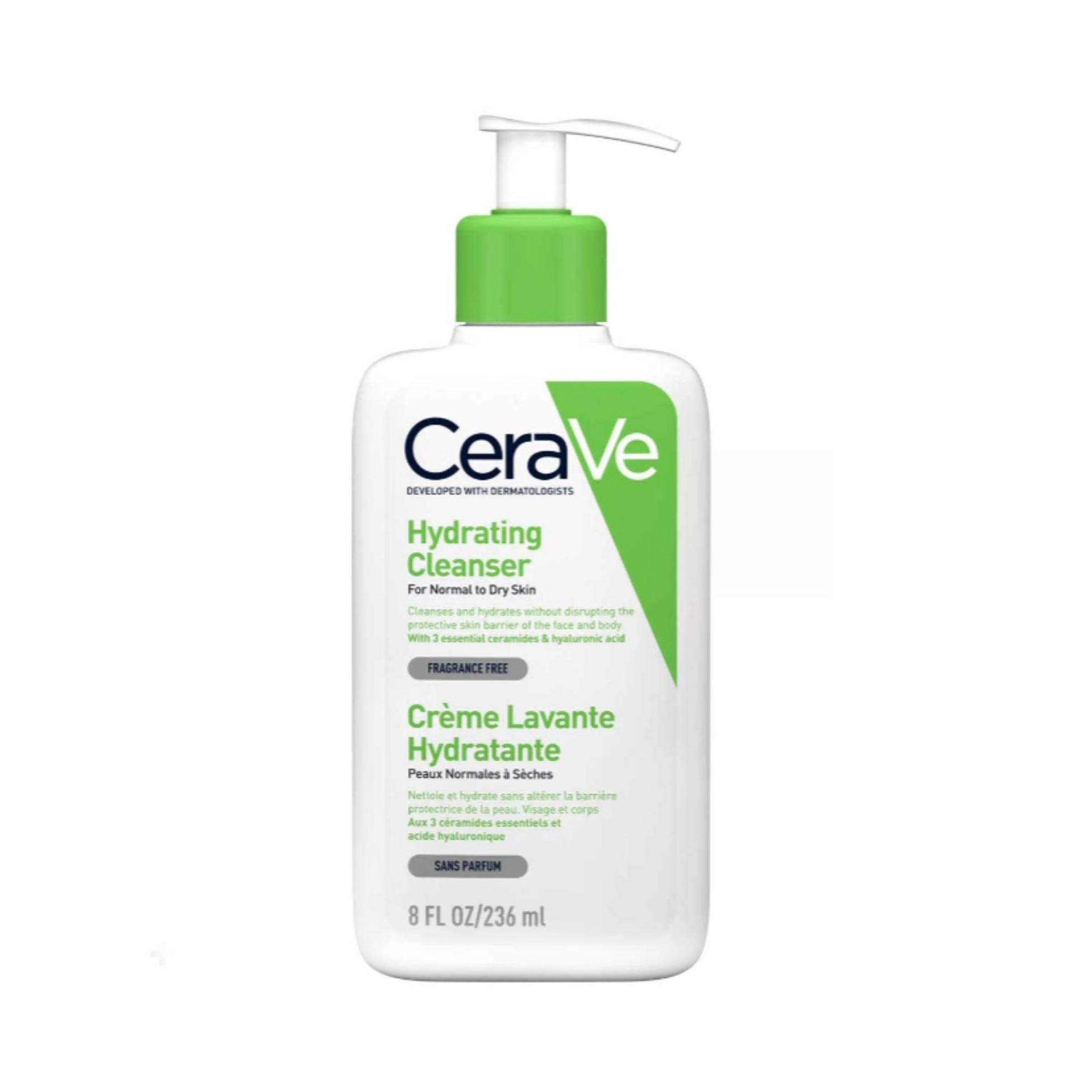
1. CeraVe Hydrating Cleanser: best overall for sensitive skin
For most people asking for the gentlest CeraVe cleanser, CeraVe Hydrating Cleanser is the most straightforward place to start.
The formula is made for normal-to-dry skin and uses:
- three essential ceramides,
- hyaluronic acid,
- glycerin,
- a non-foaming cream texture,
- and no added fragrance.
CeraVe says the cleanser removes dirt, oil and impurities without leaving skin feeling tight or dry.
Why it stands out for sensitivity
The current official Hydrating Facial Cleanser also carries the National Eczema Association Seal of Acceptance in the US and is specifically formulated without added fragrance.
That does not mean every sensitive person is guaranteed to tolerate it, but the overall design is strongly aligned with a barrier-conscious routine.
Choose Hydrating Cleanser if:
- your face stings after foaming cleansers,
- your cheeks feel tight after washing,
- you are using retinol,
- your skin has become dry from exfoliating products,
- air conditioning makes your skin uncomfortable,
- or you simply want the lowest-intensity cleanser in this comparison.
When might it feel too gentle?
Very oily skin or heavy water-resistant sunscreen may make some users prefer a more thorough foaming cleansing feel.
Read: CeraVe Hydrating Cleanser for Dry Skin: UAE Weather Guide .
2. CeraVe Foaming Cleanser: better for oily sensitive skin
Sensitive skin does not automatically mean dry skin.
If your face becomes oily through the day, CeraVe Foaming Cleanser may fit better.
Its key ingredients include:
- three essential ceramides,
- niacinamide,
- hyaluronic acid,
- and a fragrance-free foaming base.
The formula is designed for normal-to-oily skin and helps remove excess oil without aiming for the harsh, stripped finish of a strong degreasing cleanser.
Choose Foaming Cleanser if:
- your skin is reactive but still visibly oily,
- you wear sunscreen daily,
- you sweat frequently,
- your T-zone becomes shiny,
- or Hydrating Cleanser feels too creamy for your preference.
Switch back to Hydrating if:
Your face becomes tight, flaky or uncomfortable after regular foaming cleansing.
Do not confuse sensitivity with a need to leave oil and sunscreen on the skin. The goal is still effective cleansing — simply with a formula and frequency your barrier tolerates.
Read: CeraVe Foaming Cleanser for Oily Skin: Complete UAE Guide .
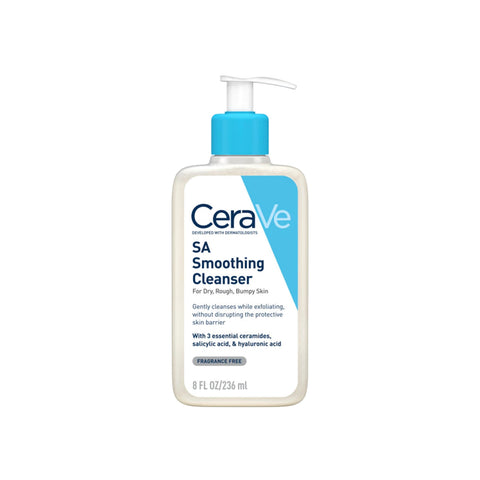
3. CeraVe SA Smoothing Cleanser: useful, but not the first choice for irritated skin
CeraVe SA Smoothing Cleanser contains salicylic acid and is designed primarily around rough, dry and bumpy skin.
The formula also includes:
- three essential ceramides,
- hyaluronic acid,
- and a fragrance-free approach.
CeraVe describes its salicylic-acid cleanser as a gentler chemical exfoliation alternative to harsh physical scrubs.
When it may help sensitive skin
Sensitivity does not automatically mean you can never exfoliate.
SA Smoothing may make sense if your skin is otherwise calm but also has:
- persistent rough texture,
- small bumps,
- flaky buildup,
- or clogged-feeling areas.
When to avoid it temporarily
Do not make salicylic acid your first response when the skin is already:
- burning,
- peeling,
- very red,
- or uncomfortable after plain moisturiser.
In that situation, reducing active products may be more sensible than adding exfoliation.
Read: CeraVe SA Smoothing Cleanser: Who Should Use It and How Often? .
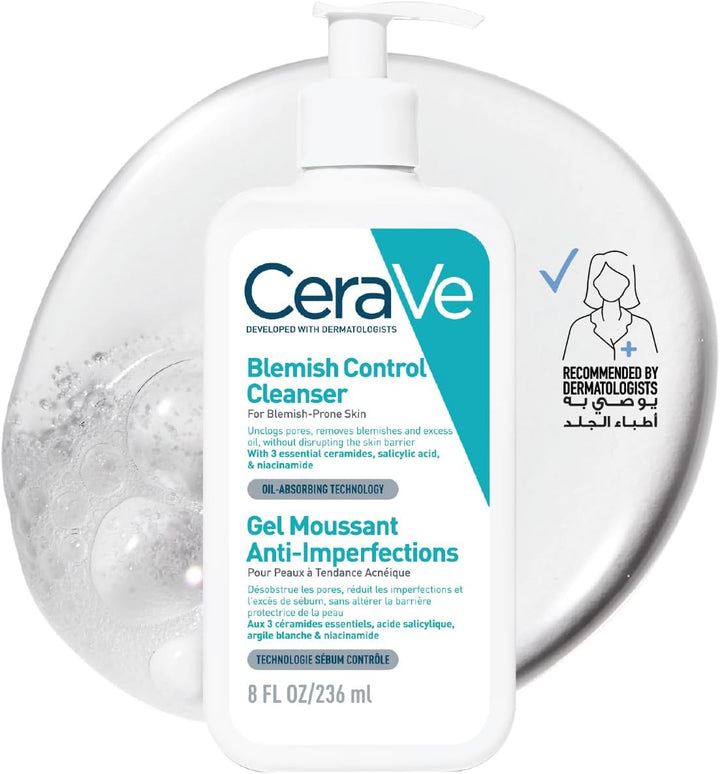
4. CeraVe Blemish Control Cleanser: for acne, not sensitivity itself
CeraVe Blemish Control Cleanser contains a clearly disclosed 2% salicylic acid.
It also contains:
- niacinamide,
- three essential ceramides,
- and oil-absorbing technology.
Its purpose is oily, blemish-prone skin — not simply skin that reacts easily.
When it can make sense
If you have sensitive skin plus genuine:
- blackheads,
- whiteheads,
- persistent clogged pores,
- or oily acne-prone skin,
the 2% BHA cleanser may have a role.
Why beginners should be careful
A 2% salicylic-acid wash plus retinol plus another leave-on acid can turn a simple acne routine into an irritation routine quickly.
If Blemish Control causes tightness, reduce frequency or use a gentler cleanser on alternate washes.
Use the fewest active products needed to address the breakouts. Sensitive acne-prone skin does not need every step — cleanser, toner, serum and moisturiser — to contain an acne active.
Compare CeraVe cleansers for sensitive skin
CERAVE
CeraVe Hydrating Cleanser 236ml
Best general starting option for sensitive, dry or tight-feeling skin. Non-foaming and fragrance-free, with three essential ceramides and hyaluronic acid for barrier-conscious cleansing.
AED 70
CERAVE
CeraVe Foaming Cleanser 236ml
The stronger everyday option for sensitive skin that is also oily. Fragrance-free formula with three essential ceramides, niacinamide and hyaluronic acid.
AED 69
CERAVE
CeraVe SA Smoothing Cleanser 236ml
Salicylic-acid cleanser for dry, rough and bumpy skin. Potentially useful when sensitive skin is calm but needs gentle exfoliation; avoid treating it as the default cleanser during active irritation.
AED 72
CERAVE
CeraVe Blemish Control Cleanser 236ml
Acne-focused cleanser with 2% salicylic acid, niacinamide, ceramides and oil-absorbing technology. Better reserved for sensitive skin that also has a clear acne or congestion problem.
AED 68
What should sensitive skin avoid when cleansing?
1. Added fragrance when you already know fragrance triggers you
CeraVe's sensitive-skin guidance specifically recommends considering fragrance-free facial cleansers because fragrance can be an irritation trigger for some sensitive skin.
The CeraVe cleansers featured here are positioned without added fragrance.
2. Very hot water
Use lukewarm water.
Hot water is unnecessary for removing facial oil and can leave reactive skin feeling more uncomfortable.
3. Scrubbing the face
Do not combine cleansing with aggressive friction from:
- rough washcloths,
- scrub brushes,
- grainy facial scrubs,
- or repeated rubbing with towels.
4. Over-cleansing
Washing more frequently is not automatically better.
Cleansing morning and evening is common, and washing after heavy sweating can make sense, but adding extra washes every time the face feels slightly oily can increase dryness.
5. Too many exfoliating products at once
Be careful with combinations such as:
- salicylic-acid cleanser,
- AHA toner,
- retinol,
- strong acne treatment,
- and physical exfoliation
all in the same routine.
6. Chasing the squeaky-clean feeling
Sensitive skin should not need to feel stretched after washing to prove that the cleanser removed dirt and oil.
After rinsing and patting dry, your skin should ideally feel clean but comfortable — not painfully tight, burning or immediately desperate for moisturiser.
How to cleanse sensitive skin correctly
For sensitive dry skin, a simple routine can be:
Hydrating Cleanser → CeraVe Moisturising Lotion or Cream → sunscreen in the morning
For sensitive oily skin:
Foaming Cleanser → lightweight moisturiser → sunscreen
The routine does not need several toners and serums to be complete.
What if your sensitive skin is also acne-prone?
This is one of the situations where people most often over-treat their skin.
Acne may make you want to use stronger cleansing, but sensitive skin may tolerate that poorly.
Start by separating cleansing from treatment
A perfectly reasonable routine can use:
gentle cleanser → targeted acne treatment → moisturiser
instead of forcing the cleanser itself to treat acne.
Use Blemish Control only when it solves a real problem
The 2% salicylic-acid cleanser becomes more useful when blackheads, whiteheads or clogged pores are persistent.
If your skin is already peeling from retinol or another acne treatment, a gentler cleanser may be preferable.
Deep or painful acne is different
A cleanser is unlikely to be enough for persistent painful, nodular, cystic or scarring acne.
Those situations deserve appropriate professional assessment rather than continually escalating over-the-counter cleansing.
Read: CeraVe Face Wash for Acne: Which Cleanser Fits Each Type of Breakout? .
Sensitive skin in UAE heat and air conditioning
The UAE can make sensitive skin difficult to read because the same face may experience sweat and oil outdoors, then dryness indoors.
Heat and sweating
After heavy sweating, cleansing can help remove:
- sweat,
- oil,
- sunscreen,
- dust,
- and daily buildup.
But you do not need an exfoliating acid every time you wash after exercise.
Strong indoor air conditioning
Long hours in air-conditioned environments can make reactive skin feel tighter.
If this happens regularly, Hydrating Cleanser may be more comfortable than repeatedly using an oil-focused cleanser.
Outdoor sunscreen
Sensitive skin still needs sun protection.
If your sunscreen is difficult to remove, consider an appropriate first-cleansing step at night instead of washing the face three times with a strong cleanser.
Your summer and winter cleanser can differ
Some people prefer:
Foaming Cleanser during oilier months
and:
Hydrating Cleanser when the skin becomes drier or more reactive.
Do not choose your cleanser based only on the outdoor temperature. Your skin may spend most of the day in air conditioning, so the after-cleansing comfort of your cheeks matters just as much as midday T-zone shine.
Final verdict: which CeraVe cleanser is best for sensitive skin?
| Priority | Best Starting Choice |
|---|---|
| Best overall for sensitive skin | CeraVe Hydrating Cleanser |
| Sensitive + dry skin | CeraVe Hydrating Cleanser |
| Sensitive + oily skin | CeraVe Foaming Cleanser |
| Sensitive + combination skin | Hydrating or Foaming depending oiliness |
| Sensitive + rough/bumpy texture | SA Smoothing cautiously |
| Sensitive + persistent blackheads/acne | Blemish Control cautiously |
| Skin currently burning or peeling | Simple gentle cleansing; avoid adding exfoliation |
CeraVe Hydrating Cleanser is the safest general starting point in this range for sensitive skin. Choose Foaming Cleanser when sensitivity overlaps with significant oiliness, and reserve SA Smoothing or Blemish Control for situations where exfoliation or acne control is genuinely needed.
Frequently asked questions
Which CeraVe cleanser is best for sensitive skin?
CeraVe Hydrating Cleanser is the best general starting point for sensitive skin, particularly when sensitivity overlaps with dryness or tightness. It is non-foaming, free of added fragrance and contains three essential ceramides and hyaluronic acid.
Can sensitive oily skin use CeraVe Foaming Cleanser?
Yes. CeraVe Foaming Cleanser can suit sensitive skin that is also oily or combination. Its fragrance-free formula contains ceramides, niacinamide and hyaluronic acid, but switch to a gentler cleanser if it causes persistent tightness or irritation.
Is CeraVe Hydrating Cleanser fragrance-free?
Yes. CeraVe Hydrating Facial Cleanser is formulated without added fragrance and is designed to cleanse without leaving normal-to-dry skin feeling tight or stripped.
Can sensitive skin use CeraVe SA Smoothing Cleanser?
Potentially, but it contains salicylic acid and is better introduced when the skin is calm and rough texture or bumps are a genuine concern. Avoid adding exfoliation when skin is already burning, peeling or highly irritated.
Is CeraVe Blemish Control Cleanser suitable for sensitive skin?
It may suit some people whose sensitive skin is also oily, blackhead-prone or acne-prone, but its 2% salicylic acid makes it a more active cleanser. Start cautiously and reduce frequency if dryness or irritation develops.
What should sensitive skin avoid when cleansing?
Avoid unnecessarily hot water, aggressive scrubbing, excessive cleansing, known fragrance triggers and stacking multiple exfoliating products when the skin is already reactive. Aim for clean, comfortable skin rather than a squeaky-tight finish.
Keep sensitive-skin cleansing simple
Compare CeraVe Hydrating, Foaming and active cleansers and choose the formula that cleans effectively without asking your skin to tolerate more than it needs.
Explore CeraVe CleansersSensitive skin can have many causes and may overlap with dryness, acne, eczema, rosacea or other conditions. A cosmetic cleanser cannot diagnose or treat an underlying medical condition. Stop or reduce products that repeatedly cause significant burning, swelling, persistent redness or peeling, and seek professional assessment when symptoms are severe or persistent. Product formulations, prices and availability can change; check the product packaging and live YesOra Beauty pages as final references.