



Oily nose. Dry cheeks. One cleanser has to handle both.
Combination skin needs enough cleansing for the T-zone without leaving the cheeks tight. Here is how to choose between CeraVe Foaming, Hydrating, SA Smoothing and Blemish Control Cleanser.

CeraVe Cleanser for Combination Skin: Which Formula Should You Choose?
Combination skin is oily in some areas and dry in others, which makes choosing a cleanser more complicated than simply buying a product labelled “for oily skin.” This guide compares CeraVe Foaming, Hydrating, SA Smoothing and Blemish Control Cleanser to help you choose according to your T-zone, cheeks, breakouts and UAE climate.
Combination skin creates an annoying contradiction: the forehead, nose and chin may look shiny by midday while the cheeks feel normal, tight or dry.
If you cleanse only for the oily areas, the cheeks may become stripped.
If you cleanse only for the dry areas, the T-zone may feel greasy or congested.
The goal is therefore not to remove as much oil as possible. It is to find a cleanser that manages excess oil while preserving enough moisture for the drier areas.
What does combination skin actually look like?
Combination skin usually means your face shows two different oil patterns at the same time.
Typical oily areas
- forehead,
- nose,
- chin,
- and sometimes the area directly around the nose.
Typical drier areas
- cheeks,
- jawline,
- and sometimes the outer edges of the face.
You may also notice:
- visible pores around the nose,
- blackheads mainly through the T-zone,
- shine by midday,
- but tightness after cleansing around the cheeks.
After washing your face, wait around 30 minutes without applying skincare. If the T-zone becomes oilier while your cheeks remain normal or feel dry, combination skin is a reasonable possibility.
Quick verdict: which CeraVe cleanser is best for combination skin?
For uncomplicated combination skin, start with CeraVe Foaming Cleanser. Only move toward Hydrating, SA Smoothing or Blemish Control when your dryness, texture or acne gives you a clear reason to do so.
1. CeraVe Foaming Cleanser: best overall starting point
For most combination-skin users, this is the most logical first CeraVe cleanser to try.
CeraVe Foaming Cleanser is designed for normal-to-oily skin and contains:
- three essential ceramides,
- niacinamide,
- hyaluronic acid,
- and a foaming cleansing system.
The formula removes excess oil and impurities but is designed not to leave the skin feeling stripped.
Why it suits combination skin
The oily T-zone gets the foaming cleanse it often needs, while the ceramides, niacinamide and hyaluronic acid make the formula more balanced than a harsh degreasing wash.
Choose it if:
- your T-zone gets shiny,
- your cheeks are normal rather than very dry,
- you have occasional clogged pores,
- you want one simple cleanser morning and night,
- or you are unsure which CeraVe cleanser to start with.
Skip or reduce it if:
Your cheeks become persistently tight, flaky or irritated after cleansing.
Read: CeraVe Foaming Cleanser for Oily Skin: Complete UAE Guide .
2. CeraVe Hydrating Cleanser: when combination skin leans dry
Not every combination face needs a foaming cleanser.
If your T-zone is mildly oily but the rest of the face regularly feels dry or uncomfortable, CeraVe Hydrating Cleanser may be the better fit.
It is a fragrance-free, non-foaming cleanser built around:
- three essential ceramides,
- hyaluronic acid,
- and gentle cleansing for normal-to-dry skin.
Choose it if:
- your cheeks feel dry,
- your skin becomes tight after foaming cleansers,
- you use retinol or exfoliating treatments,
- air conditioning leaves your face dehydrated,
- or winter makes your combination skin noticeably drier.
When may it feel too gentle?
If your T-zone is extremely oily or you wear heavy, water-resistant sunscreen, you may prefer the cleansing feel of Foaming Cleanser.
Read: CeraVe Hydrating Cleanser for Dry Skin: UAE Weather Guide .
3. CeraVe SA Smoothing Cleanser: for texture and congestion
Combination skin can also develop:
- rough texture,
- visible clogged pores,
- small bumps,
- or blackhead-prone areas around the nose.
That is where CeraVe SA Smoothing Cleanser can become relevant.
It contains salicylic acid alongside three essential ceramides and hyaluronic acid.
The important distinction is that CeraVe primarily positions this formula around dry, rough and bumpy skin, not as its most acne-focused cleanser.
Choose SA Smoothing if:
- your combination skin also feels rough,
- small bumps are more annoying than inflamed acne,
- your nose becomes congested,
- or you want gentle rinse-off exfoliation.
Do you need it twice daily?
Usually not as a starting point.
If you are new to salicylic acid, several uses per week or once daily can be more sensible than immediately using it morning and night.
Read: CeraVe SA Smoothing Cleanser: Who Should Use It and How Often? .
4. CeraVe Blemish Control Cleanser: when combination skin is acne-prone
If your combination skin is not merely shiny but develops blackheads, whiteheads and regular breakouts, Blemish Control becomes the more targeted option.
The cleanser contains:
- 2% salicylic acid,
- niacinamide,
- three essential ceramides,
- and oil-absorbing technology.
It is specifically positioned for oily, blemish-prone skin.
Choose it if:
- the T-zone is consistently oily,
- blackheads develop around the nose,
- you experience recurring clogged pores,
- active breakouts are common,
- or controlling shine is more important than treating dry cheeks.
Be careful if your cheeks are already dry
A 2% salicylic-acid cleanser may be more active than you need across the entire face every time you wash.
You can reduce frequency or alternate it with a gentler cleanser instead of assuming more acid is always better.
Read: CeraVe Blemish Control Cleanser: BHA Guide for Breakout-Prone Skin .
Compare CeraVe cleansers for combination skin
CERAVE
CeraVe Foaming Cleanser 236ml
The best general starting point for combination skin with an oily T-zone and normal cheeks. Combines three essential ceramides, niacinamide and hyaluronic acid with a refreshing foaming cleanse.
AED 69
CERAVE
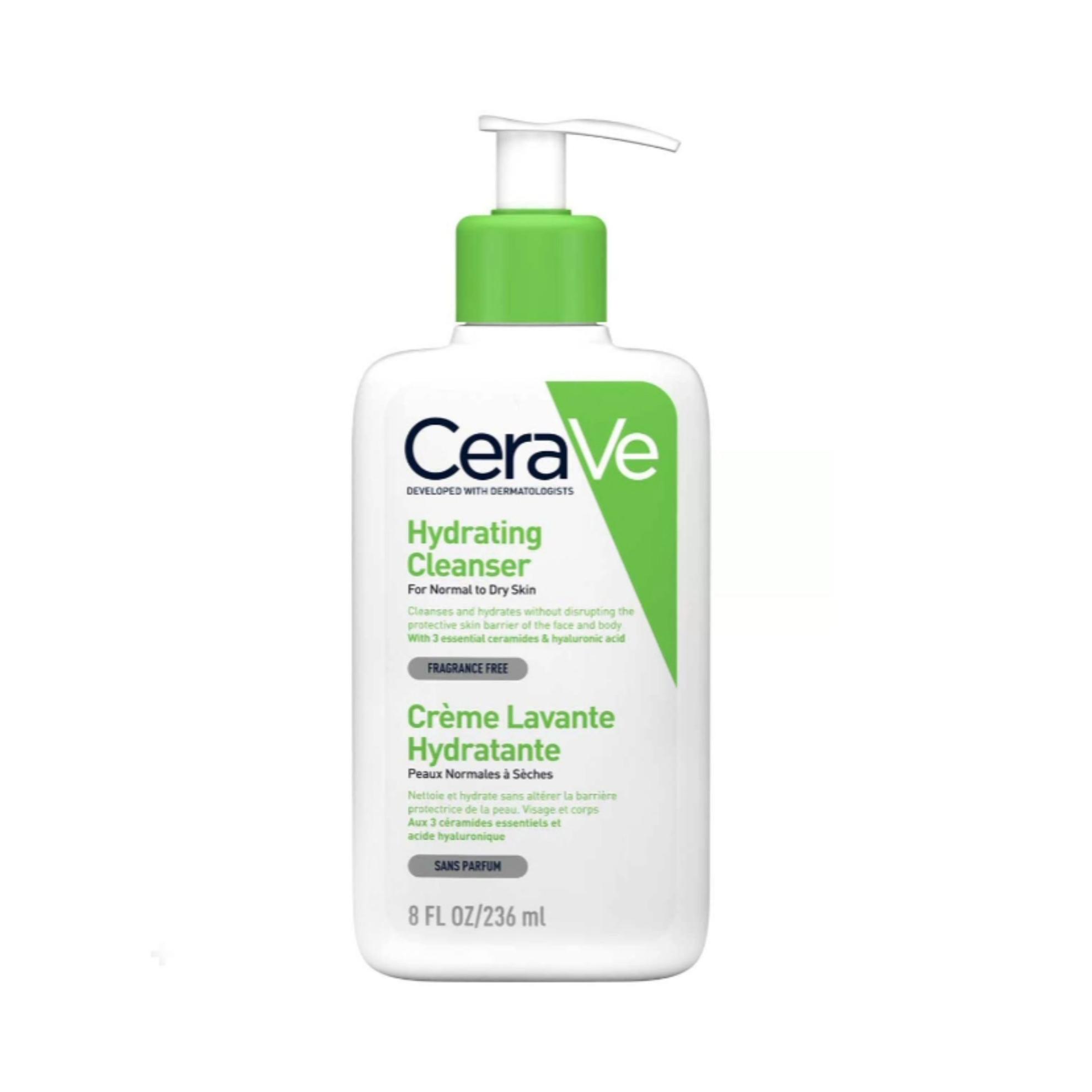
CeraVe Hydrating Cleanser 236ml
Non-foaming option for combination skin that leans dry or dehydrated. Particularly useful when cheeks feel tight or active treatments make the skin less tolerant of foaming cleansers.
AED 70
CERAVE
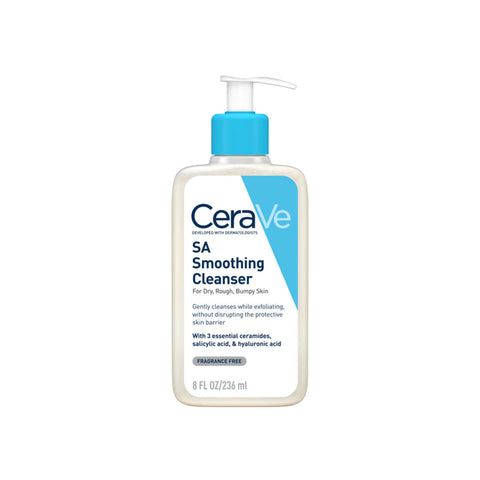
CeraVe SA Smoothing Cleanser 236ml
Salicylic-acid cleanser better suited when combination skin also has roughness, uneven texture or mild pore congestion. Its main positioning remains dry, rough and bumpy skin.
AED 72
CERAVE
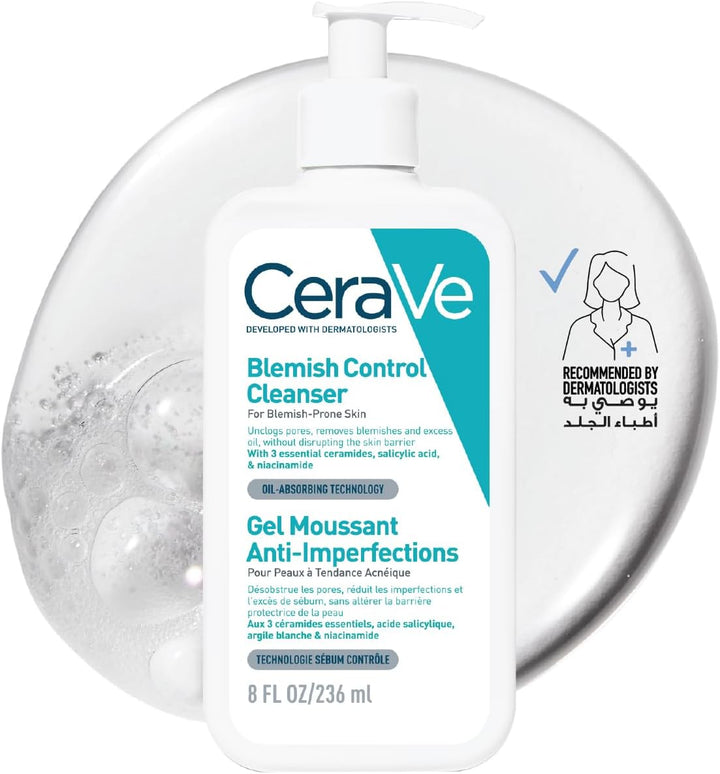
CeraVe Blemish Control Cleanser 236ml
The acne-focused option with 2% salicylic acid, niacinamide, ceramides and oil-absorbing technology. Best when an oily, breakout-prone T-zone is the dominant combination-skin problem.
AED 68
Which formula should you choose?
| Your Combination-Skin Pattern | Best Starting CeraVe Cleanser |
|---|---|
| Oily T-zone + normal cheeks | Foaming Cleanser |
| Oily T-zone + noticeably dry cheeks | Hydrating Cleanser or Foaming Cleanser once daily |
| Combination skin + rough texture | SA Smoothing Cleanser |
| Combination skin + blackheads | Blemish Control if acne-prone; SA Smoothing if texture is the bigger issue |
| Combination skin + active breakouts | Blemish Control Cleanser |
| Combination skin using retinol | Foaming or Hydrating Cleanser depending dryness |
| Combination skin that feels tight after every wash | Hydrating Cleanser |
| No major acne or roughness | Foaming Cleanser |
If your only concern is a slightly oily nose and otherwise balanced skin, you probably do not need a 2% salicylic-acid cleanser twice a day. Start with the simplest formula that solves the problem.
Do combination-skin users need two different cleansers?
Not necessarily.
Many people can use one balanced cleanser for the entire face.
CeraVe itself recommends gentle foaming cleansing for combination skin because the aim is to remove excess T-zone oil without over-stripping the drier areas.
When two cleansers can make sense
Your skin may change according to:
- season,
- retinol use,
- acne treatment,
- UAE summer heat,
- air-conditioning exposure,
- or changes in your skin barrier.
For example:
Morning: Hydrating Cleanser
Evening: Foaming Cleanser
can work when the face feels dry in the morning but becomes oily and covered in sunscreen by evening.
Another option is:
Most days: Foaming Cleanser
Several evenings per week: SA Smoothing or Blemish Control if needed
You usually do not need to wash your nose with one cleanser and your cheeks with another every single time. Adjusting cleanser frequency is often simpler than micromanaging separate products across facial zones.
A simple CeraVe routine for combination skin
Morning
Evening
What if your combination skin is also acne-prone?
Combination skin can absolutely be acne-prone.
The oily T-zone can create an environment where blackheads, whiteheads and clogged pores become more common.
But that does not mean the dry cheeks should be treated like oily acne skin.
If acne is mild and occasional
Start with Foaming Cleanser and use a separate treatment only when needed.
If blackheads and congestion are persistent
Blemish Control Cleanser becomes more relevant because it contains 2% salicylic acid.
If the face is rough but not heavily acne-prone
SA Smoothing may be a better match than the more acne-specific Blemish Control formula.
For a full breakdown, read: CeraVe Face Wash for Acne: Which Cleanser Fits Each Type of Breakout? .
How UAE weather changes combination skin
Combination skin can shift significantly throughout the year.
Outdoor heat and humidity
The T-zone may become noticeably oilier when:
- you sweat more,
- wear sunscreen daily,
- commute outdoors,
- or spend long periods in humid conditions.
During those periods, Foaming Cleanser may feel more appropriate than Hydrating Cleanser.
Strong indoor air conditioning
The cheeks may become drier after hours in:
- offices,
- universities,
- shopping malls,
- cars,
- gyms,
- and air-conditioned bedrooms.
If that happens, reduce aggressive cleansing rather than assuming the new dryness requires several extra serums.
Seasonal flexibility
You may prefer:
Foaming Cleanser during hotter, oilier months
and:
Hydrating Cleanser during periods when your skin becomes drier or more treatment-sensitive.
Your cleanser does not need to remain identical all year. Combination skin can shift with climate, indoor AC and treatment use. Adjusting between a gentle foaming and hydrating cleanser can be more useful than forcing one formula through every season.
What about CeraVe Balancing Air Foam Cleanser?
CeraVe now offers a Balancing Air Foam Facial Cleanser in some markets, specifically designed for normal, combination and sensitive skin.
The manufacturer positions it around simultaneous oil control and hydration, with three essential ceramides and allantoin.
However, a current YesOra product listing for this cleanser was not verified at publication.
For YesOra shoppers, this guide therefore focuses on the formulas currently present in the CeraVe range rather than inventing a local price or product page for the newer cleanser.
Final verdict: the best CeraVe cleanser for combination skin
| Priority | Best Choice |
|---|---|
| Best overall | CeraVe Foaming Cleanser |
| Dry/dehydrated combination skin | CeraVe Hydrating Cleanser |
| Rough texture and mild congestion | CeraVe SA Smoothing Cleanser |
| Acne, blackheads and oily T-zone | CeraVe Blemish Control Cleanser |
| Using retinol and becoming dry | CeraVe Hydrating Cleanser |
| No major skin problem beyond T-zone shine | CeraVe Foaming Cleanser |
CeraVe Foaming Cleanser is the best starting point for most combination skin. Move toward Hydrating Cleanser when dryness dominates, SA Smoothing when rough texture dominates, or Blemish Control when acne and clogged pores dominate.
Frequently asked questions
What is the best CeraVe cleanser for combination skin?
CeraVe Foaming Cleanser is the best general starting point for most combination skin because it removes excess oil from the T-zone while including ceramides, niacinamide and hyaluronic acid to help maintain moisture balance.
Should combination skin use CeraVe Foaming or Hydrating Cleanser?
Choose Foaming Cleanser when the T-zone is clearly oily and the cheeks are normal. Choose Hydrating Cleanser when the cheeks are dry, tight or dehydrated and oiliness is relatively mild.
Can combination skin use CeraVe SA Smoothing Cleanser every day?
Daily use may suit some skin, but beginners do not need to start daily. Introduce it gradually when rough texture or congestion is present and reduce frequency if the cheeks become dry or irritated.
Is CeraVe Blemish Control Cleanser good for combination skin?
It can be a good choice when combination skin is also oily, blackhead-prone or acne-prone. Because it contains 2% salicylic acid, it may be more active than necessary when the main issue is only mild T-zone shine.
Can I use two different CeraVe cleansers for combination skin?
Yes. For example, Hydrating Cleanser can be used when the skin feels dry and Foaming Cleanser when it becomes oilier. You can also use an SA cleanser several evenings per week rather than at every cleanse.
How often should combination skin cleanse?
Many people cleanse in the morning and evening, but frequency should be adjusted according to oiliness, sweating, sunscreen use and dryness. If twice-daily cleansing causes tightness or irritation, use a gentler cleanser or reduce the intensity of the routine.
Balance oil without stripping the dry zones
Compare CeraVe Foaming, Hydrating, SA Smoothing and Blemish Control Cleanser for your combination-skin routine at YesOra Beauty.
Explore CeraVe CleansersCombination skin can change with season, climate, hormones, treatment products and skin-barrier condition. Oily T-zone, dehydration, acne and sensitive skin are overlapping but distinct concerns. Salicylic-acid cleansers can cause dryness or irritation when used more frequently than the skin tolerates. Persistent, painful or scarring acne should be assessed by a qualified healthcare professional. Product prices and availability can change after publication; use the live YesOra Beauty product pages as the final shopping reference.


